Find Churros Maker for Street Stalls, Bakeries, and Cafes
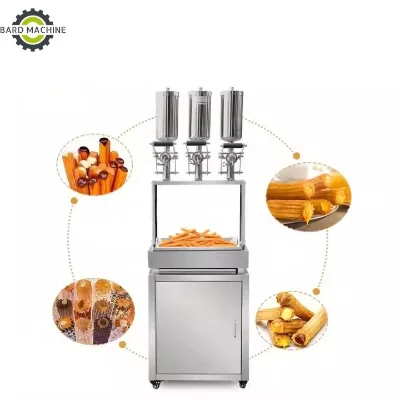
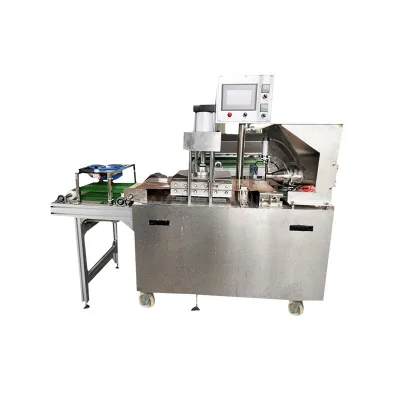
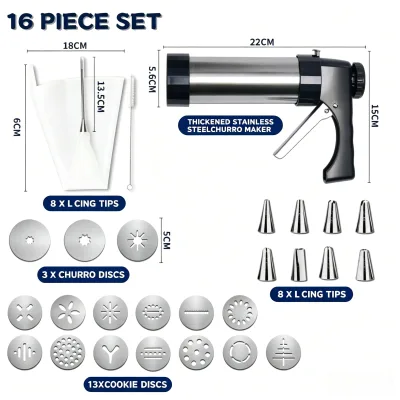
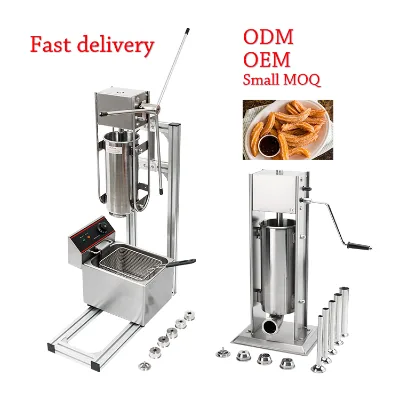
Source 30 churros maker units from verified factories in China. Compare models like QD-A10 and SY-CH10-1, noting features such as SUS304 construction, electric power sources, and semi-automatic operation to suit various production needs.
Key considerations
Products List


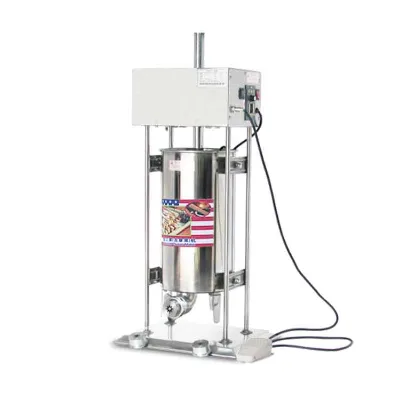
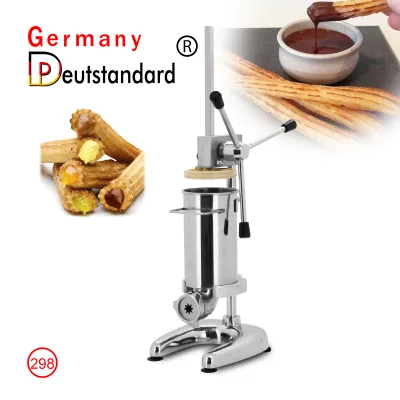
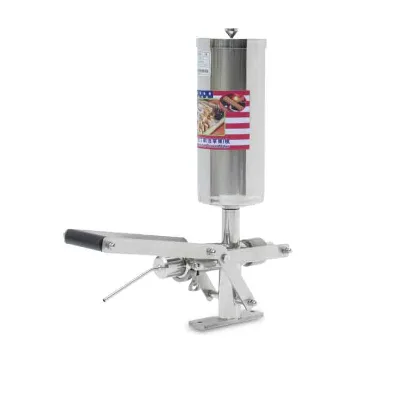
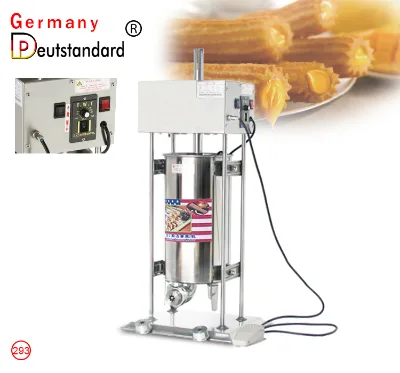
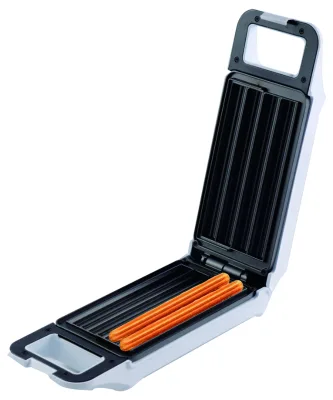
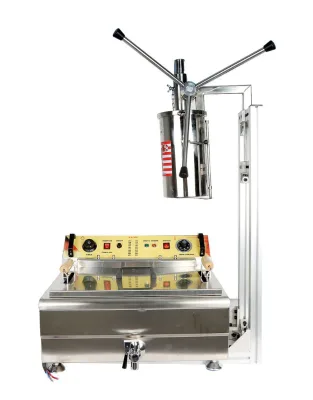
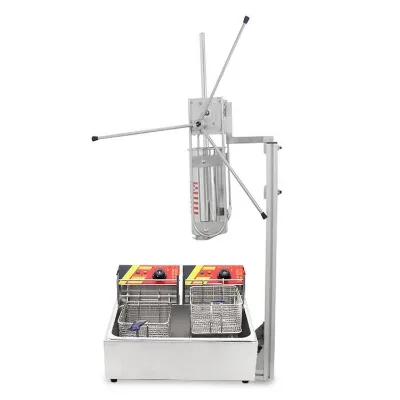
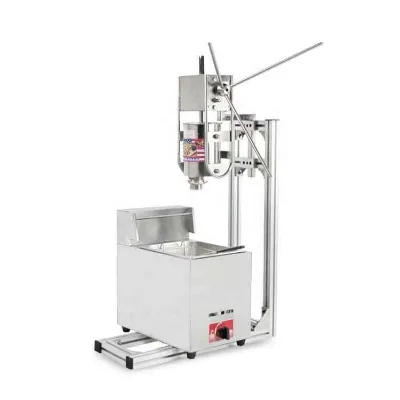

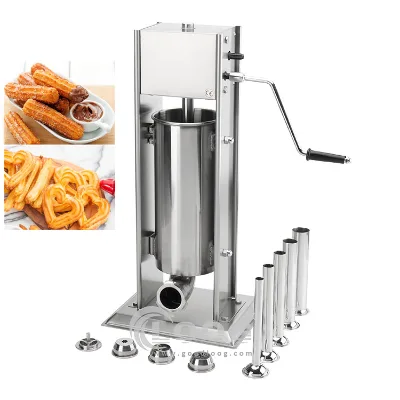

Comprehensive Sourcing Guide
Strategic Sourcing Guide for Industrial Churros Making Machines
Understanding the Technical Landscape of Churros Production Equipment
When sourcing churros making machines for commercial or industrial applications, buyers must first distinguish between the varying operational modes and mechanical configurations available in the current market. The product data indicates a clear segmentation between semi-automatic and manual grades, suggesting that procurement decisions should align closely with the intended production volume and labor availability. For facilities requiring high throughput with minimal manual intervention, the semi-automatic grade represents a significant operational advantage, whereas manual models may suffice for low-volume bakeries or demonstration units.
A critical technical differentiator is the power source, which is consistently identified as electric across the observed product range. This standardization simplifies electrical infrastructure planning but necessitates verification of voltage compatibility and phase requirements for the specific region of installation. The core mechanical architecture often features a "New Powerful Gear System," which implies a focus on torque transmission and durability under continuous load. This feature is particularly relevant for machines designed to extrude dense dough through various nozzle configurations to create the characteristic ridged texture of churros.
Material composition is another paramount technical specification. The supply chain data highlights the use of SUS304 stainless steel and Stainless Steel 201. SUS304 is generally preferred for food contact surfaces due to its superior corrosion resistance and ease of cleaning, meeting higher hygiene standards. In contrast, Stainless Steel 201 offers a cost-effective alternative but may require more rigorous maintenance protocols to prevent rust in humid environments. Buyers should verify the specific application of these materials within the machine's construction, ensuring that all food-contact zones utilize the higher-grade SUS304 to guarantee food safety compliance.
Compliance, Certification, and Regulatory Standards
Navigating the regulatory landscape is essential for importing industrial food machinery. The presence of CE certification in the product attributes serves as a primary indicator of compliance with European health, safety, and environmental protection standards. This certification is a critical benchmark for buyers operating in or exporting to the European Union, as it validates that the electrical and mechanical components meet specific safety directives. However, the absence of other specific certifications in the provided data means buyers must independently verify compliance with local regulations in their target markets, such as NSF, UL, or local food safety authority approvals.
Beyond electrical safety, the physical standards of the machinery must be scrutinized. The observed product standards list specific dimensions and weights, such as a model with a standard of 653438cm and a weight of 31kg, while others vary significantly, including a compact unit at 583224cm weighing 12kg. These variations indicate that "standard" is not a universal value but a model-specific attribute. Procurement teams must ensure that the physical dimensions of the selected unit fit within the allocated floor space of the production facility, accounting for necessary clearance for operation and maintenance.
Furthermore, the process classification as "Thermal Processing" suggests that these machines may involve heating elements or ovens integrated into the churros making process. This classification triggers additional safety requirements regarding thermal insulation, temperature control accuracy, and fire safety. Buyers should request detailed thermal safety data sheets and verify that the machine's design includes appropriate safety interlocks to prevent accidental burns or overheating during operation.
Cost Drivers and Pricing Structure Analysis
The pricing landscape for churros makers is highly variable, with observed listed prices ranging from $5.01 to $4,895.33 USD. This broad spectrum reflects differences in capacity, automation level, material quality, and brand positioning. The lower end of the price range likely corresponds to manual or small-scale semi-automatic units with basic stainless steel construction, while the higher end encompasses industrial-grade machines with advanced gear systems, larger capacities, and comprehensive safety features.
Several key factors drive these cost variations. First, the material grade is a primary cost driver; machines utilizing SUS304 stainless steel will inherently cost more than those using Stainless Steel 201 due to the raw material costs and processing requirements. Second, the level of automation significantly impacts price. A semi-automatic machine with a powerful gear system and higher capacity will command a premium over a manual unit. Third, the packaging and shipping requirements influence the final landed cost. Options such as "Standard Export Carton" versus "Carton Box with Wooden Pallet" or "Plywood Cases" represent different levels of protection and logistics costs, which are often factored into the quoted price.
Buyers should also consider the Minimum Order Quantity (MOQ) as a cost driver. The observed MOQ range spans from 1 to 100 units. For small businesses or startups, an MOQ of 1 set allows for low-risk market entry, whereas larger operations may negotiate better unit economics by ordering in bulk. Additionally, the availability of discounts for first-time cooperation is a notable market practice, offering an opportunity to reduce initial procurement costs. However, buyers must verify the terms of such discounts to ensure they do not compromise on quality or after-sales support.
Typical Applications and Capacity Planning
The application scope of churros making machines extends from small-scale retail bakeries to large-scale industrial food production facilities. The capacity data reveals a wide range of operational capabilities, with specific models offering filling volumes of 5 liters and hopper capacities up to 10 liters. These specifications are critical for capacity planning. A machine with a 5-liter filling volume is suitable for batch processing in a café or small bakery, while a 10-liter capacity unit is better suited for higher-volume production lines.
The physical dimensions of the machines also dictate their suitability for different environments. For instance, a model with a standard size of 190x130x590 mm is relatively compact and may be ideal for kitchens with limited counter space. Conversely, larger units with dimensions like 670450350 mm require dedicated floor space and potentially reinforced flooring to support the net weight of 21kg and gross weight of 24kg. Buyers must assess their available space and workflow to select a machine that integrates seamlessly into their existing operations without causing bottlenecks.
The "Easy to Clean" feature is a vital attribute for applications requiring frequent sanitation, such as commercial bakeries that operate multiple shifts. Machines designed with smooth surfaces and accessible components reduce downtime for cleaning, thereby increasing overall production efficiency. Additionally, the "Easy to Operate" advantage suggests that these machines are designed with user-friendly interfaces, reducing the training time required for new staff and minimizing the risk of operational errors.
Supplier Evaluation and Verification Protocols
Evaluating suppliers for churros making machines requires a rigorous approach to verify claims regarding factory status and service capabilities. The data indicates that suppliers often claim to be "Factory Directly Supply," which can offer cost advantages by eliminating middlemen. However, buyers must independently verify this claim by requesting business licenses, factory photos, and video tours of the production facility. The location data points to Henan, China, as a significant origin point, but buyers should confirm the specific factory address and ensure it matches the claimed location.
Service capabilities are another critical evaluation criterion. The availability of "Door to Door Service" and "Professional Product and Service Team" are significant value-adds that can simplify the procurement process. Buyers should inquire about the specific scope of these services, including whether they cover installation, training, and after-sales support. The claim of "Always Best Price" for first cooperation should be treated as a negotiation starting point rather than a guaranteed final price, requiring careful comparison with market rates.
Lead time is a crucial factor in supply chain planning. The observed data suggests arrival times of 8-12 days by air and 30-60 days by sea. These estimates are subject to change based on shipping conditions, customs clearance, and the specific supplier's production schedule. Buyers should request a confirmed lead time in writing and include buffer periods in their production planning to mitigate potential delays. Furthermore, the "Why Choose Us" attributes, such as a professional team, should be validated through customer references and case studies to ensure the supplier can deliver on their promises.
Quality Control and Long-Term Procurement Considerations
Implementing a robust quality control (QC) protocol is essential for ensuring the longevity and performance of churros making machines. Given the variation in material grades and construction standards, buyers should consider engaging third-party inspection services to verify the quality of materials, welding integrity, and electrical safety before shipment. The inspection should specifically focus on the food-contact surfaces to ensure they meet the required stainless steel grade and that the gear systems operate smoothly without excessive noise or vibration.
Long-term procurement considerations extend beyond the initial purchase price to include maintenance, spare parts availability, and total cost of ownership. Buyers should inquire about the availability of replacement parts, such as nozzles, gears, and heating elements, and the expected lead time for these components. The "Standard Export Carton" and "Export Standard Package" suggest that the machines are designed for safe transport, but buyers should verify the durability of the packaging to prevent damage during transit.
Additionally, the customization options available in the market allow buyers to tailor the machine to their specific production needs. Whether it is adjusting the hopper diameter, modifying the packing dimensions, or customizing the color to match brand identity, these features can enhance the machine's utility. However, buyers must balance the benefits of customization against the potential impact on lead time and cost. Finally, establishing a long-term relationship with a reliable supplier can provide access to ongoing technical support, updates, and potential discounts for future orders, ensuring a sustainable procurement strategy for churros production equipment.
Comparative Analysis of Key Product Attributes
To facilitate informed decision-making, the following table summarizes the key attributes observed across the different churros making machine models. This comparison highlights the diversity in specifications, helping buyers identify the most suitable option for their specific operational requirements.
| Attribute | Model QD-A10 | Model QD-3 | Model CHMNP5 | Model SY-CH10-1 | Model SY-CH15E | Model SY-CH25F |
|---|---|---|---|---|---|---|
| Automatic Grade | Semi-Automatic | Manual | N/A | N/A | N/A | N/A |
| Material | SUS304 | Stainless Steel 201 | Stainless Steel | N/A | N/A | N/A |
| Dimensions (mm) | 650x340x380 | 580x320x240 | 190x130x590 | 650x420x300 | 420x330x780 | 600x400x290 |
| Weight (kg) | 31 | 12 | 21 (Net) / 24 (Gross) | N/A | N/A | N/A |
| Hopper Capacity | N/A | N/A | 10L | 5L | N/A | N/A |
| Packing | Standard Export Carton | N/A | Carton Box w/ Wooden Pallet | Export Standard Package | Export Carton or Plywood Cases | N/A |
| Origin | Henan, China | China | China | China | China | China |
| Key Feature | Powerful Gear System | Easy to Clean | Thermal Processing | N/A | N/A | N/A |
This comparative overview underscores the importance of matching specific machine attributes to the buyer's operational needs. While some models prioritize material quality with SUS304, others focus on compactness or specific processing capabilities. By carefully analyzing these attributes, buyers can select a churros making machine that optimizes efficiency, hygiene, and cost-effectiveness for their unique production environment.
FAQs
What certifications do churros makers have?
The products carry CE certification, indicating compliance with European safety standards. Buyers should verify additional local approvals like NSF or UL based on their specific region before finalizing procurement.
Which material grades are used for construction?
Machines utilize SUS304 stainless steel and Stainless Steel 201 for durability. SUS304 is preferred for food contact surfaces due to superior corrosion resistance, while 201 offers a cost-effective alternative.
How long does delivery take by sea?
Delivery by sea typically requires 30 to 60 days for arrival. Buyers should account for this lead time in their production planning and consider air shipping for faster 8-12 day delivery.
Can I get a discount for the first order?
Yes, discounts are available for the first cooperation with the supplier. Buyers should negotiate to secure the best price while ensuring that quality and after-sales support remain uncompromised.
What is the minimum order quantity for these machines?
The minimum order quantity ranges from 1 set to 100 units depending on the model. Small businesses can start with a single set, while larger operations may negotiate bulk pricing.
Are customization options available for these machines?
Customization is available to tailor the machine to specific production needs. Buyers can request adjustments to specifications or packaging while noting that custom orders may impact lead times.
What is the filling volume capacity of the machines?
Selected models offer filling volumes of 5 liters and hopper capacities up to 10 liters. This capacity range suits both small bakery batches and higher-volume industrial production lines.